
Wisconsin's county permit report has been updated through September, giving communities a fresh look at where single-family construction is being authorized. It is useful information. It is also easy to ask it to answer a question it cannot answer: whether the Northwoods is producing enough year-round, owner-occupied housing for the people who work here.
The Wisconsin Builders Association describes its quarterly county report as housing-activity data compiled from information supplied by the Wisconsin Department of Safety and Professional Services. The department's public search is more precise about the record: it represents approved Uniform Dwelling Code permits and the dates they were properly submitted. In other words, a permit is an authorization at the front of the construction process, not proof of a completed or occupied home.
The first-quarter report illustrates why the numbers still deserve attention. It recorded 22 single-family permits in Oneida County, 25 in Lincoln County, 26 in Vilas County and 10 in Forest County from January through March 2026. Those are real projects moving through local systems. But a combined count cannot tell a county board, employer or prospective buyer what those homes cost, who will occupy them or whether they replace older homes rather than add to the year-round supply.
What the permit count actually measures
A permit can lead to a primary residence, a seasonal home, a high-end lake property, an owner-built house, a replacement after demolition or a project that never reaches completion. Each may be legitimate construction activity. They do not all answer the same housing need, and treating them as interchangeable can make a community's progress look clearer than it is.
This is not a criticism of the state report. A permit database should report permits accurately. The mistake happens when local housing strategy stops at the number because it is the easiest number to retrieve. The Census Bureau's construction definitions separate authorization, authorized-but-not-started work, starts, construction in progress and completions for a reason. They are different stages with different risks between them.
For workforce housing, four facts are missing from a permit total. The first is tenure: will the finished home be owner-occupied, rented or used seasonally? The second is price: will the complete property land near the range local wages can support? The third is net supply: is it an additional home or a replacement? The fourth is delivery: did the project receive final approvals and become available for occupancy?
The missing questions are the important ones
Those questions matter especially in Oneida County. The 2025 county housing study estimates a need for as many as 1,141 additional owner-occupied homes by 2030. It identifies homes priced from $200,000 to $299,000 as a high-priority need for households earning $75,000 to $99,000, and it reports that more than 85 percent of surveyed home seekers considered single-family homes for purchase the hardest type to find.
A permit for a $900,000 seasonal residence contributes construction work and tax base, but it does not fill that study's $200,000-to-$299,000 ownership gap. A demolition permit followed by a replacement home can improve a property without increasing the number of homes. A permit pulled in December and left inactive through the next building season is not yet a place for a nurse, teacher, deputy, machinist or hospitality manager to live.
The better local measure is a housing pipeline. It begins before the permit, when a parcel is being tested for access, soils, wetlands, zoning, density and utility service. It continues through site control, survey and engineering, subdivision or land-use approval, financing, infrastructure construction, the home permit, the start, the completion and finally the household that occupies the property.
Track the pipeline, not only the approval
A practical scorecard does not need to expose a buyer's private information. For each project, it can record the municipality, parcel or development name, expected lots or homes, intended tenure, target price band, infrastructure status, approval stage, construction starts, completed homes and whether an owner-occupancy restriction or other affordability commitment applies. The same row can be updated as a project moves instead of being counted as new progress every time it reaches another meeting agenda.
Price should be recorded as the complete property, not the house alone. Land, roads, drainage, foundations, wells, septic systems or municipal connections, electric service, driveways, delivery, installation, permits, financing and contingency all reach the buyer eventually. A project described as attainable because of its home-only price can miss the local target after the site work is added.
The scorecard also exposes where projects stall. If ten potential homes have site control but no sewer capacity, the next useful action may be infrastructure financing. If approvals are complete but no lender will support the appraisal, the problem is financeable collateral. If finished lots exist but house packages are too expensive, the team can test smaller plans, factory construction or a different finish standard. One permit total cannot make those distinctions.
A subdivision is potential supply
Subdivision counts require the same discipline. A recorded 24-lot plat is potential supply, not 24 completed homes. The developer may still need roads, stormwater work, utilities and construction financing. Lots may be released in phases, and some may never be built. A community should celebrate the approval while keeping the 24 homes in the pipeline column until vertical construction and occupancy occur.
That distinction can improve public decisions. A town considering assistance for a road extension should know how many buildable lots the work unlocks, the expected pace of construction and whether the finished homes serve year-round owners. An employer considering a housing contribution should know whether the money changes the finished price or only fills a general project gap. A landowner offering property should know whether access and utility costs leave enough room for the intended home price.
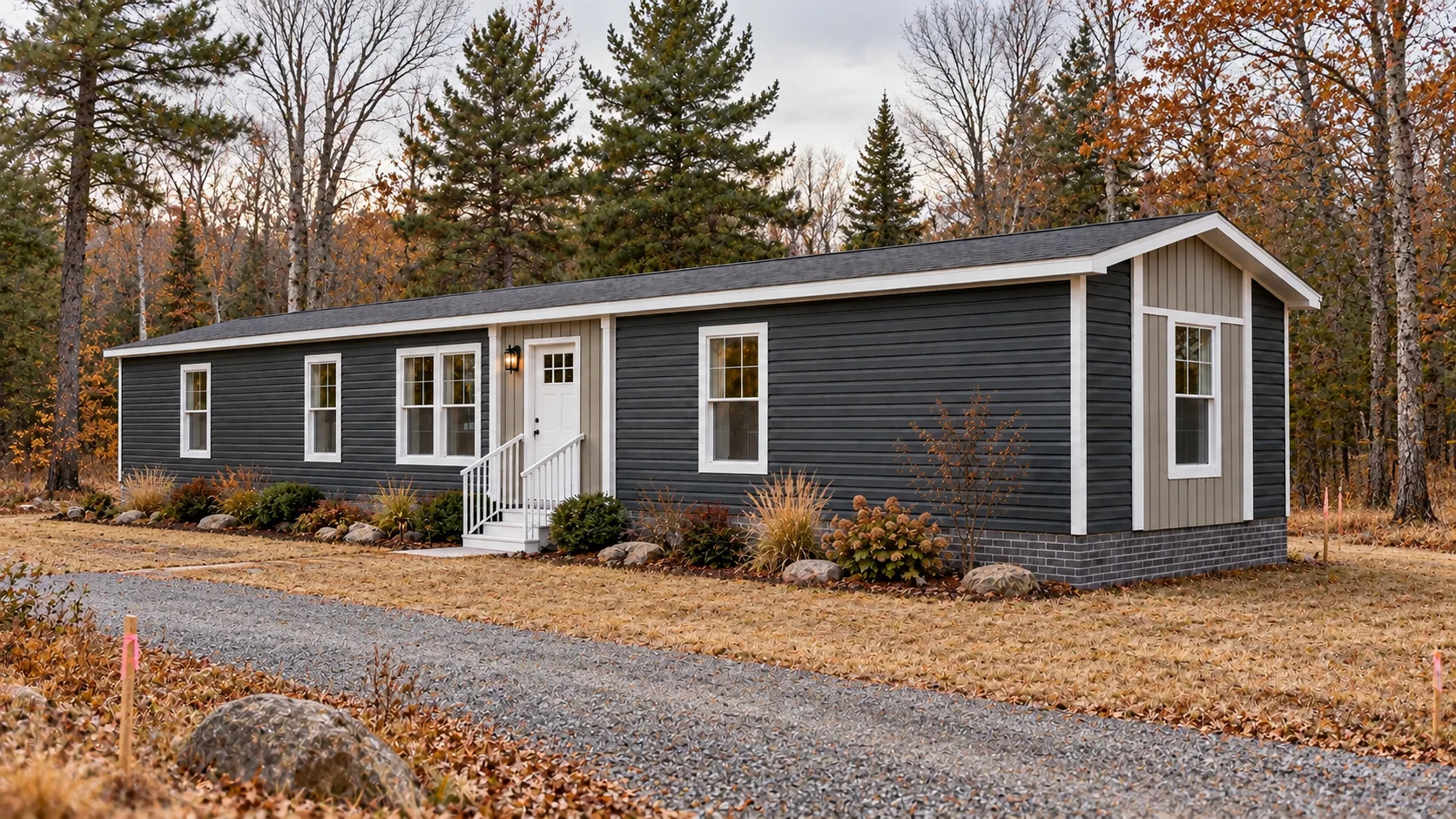
Factory-built homes belong in the same pipeline, with one additional caution. The house can be substantially complete before the Wisconsin site is ready, which makes it tempting to count production too early. The finished property still needs a legal lot, site-specific foundation and installation, transportation, access, water and wastewater, electrical service, drainage, inspections, title work, appraisal and a mortgage path that recognizes the home and land together.
Factory-built homes need the same scorecard
A manufactured home permit or order therefore should not be reported as a delivered ownership opportunity until the site and financing are coordinated. That is not a weakness of factory construction. It is a reminder that factory efficiency controls one major part of the project while land development and mortgage readiness remain local work.
For a small Northwoods development, repeatability makes the scorecard more useful. Several approved Clayton plans can be paired with a limited family of foundations, known utility locations and complete site allowances. The project can then compare actual cost, appraisal and schedule from one home to the next. The goal is not to make every buyer choose the same house. It is to stop rediscovering the same hidden costs on every lot.
Local governments can begin with information they already have. Planning and zoning records identify potential subdivisions and land-use approvals. Building officials know permits and inspections. Assessors and certificates of occupancy help confirm completed properties. Developers can provide target tenure and price bands without promising a sale price years in advance. Housing partners can then report a range and a stage instead of presenting every early concept as a finished unit.
Measure the homes the study calls for
The public summary should be modest: homes proposed, lots approved, permits issued, homes started, homes completed and owner-occupied homes delivered within locally relevant price bands. Each number should carry an as-of date. Projects can move backward as financing, costs or site conditions change, and a credible scorecard should show that rather than quietly leaving an abandoned concept in the total.
This is how the Oneida County study becomes an operating plan instead of a document on a shelf. Start with the need for up to 1,141 owner-occupied homes. Subtract completed, additional owner-occupied homes rather than every permit. Show how many more are in a credible pipeline, what price bands they target and which barrier separates them from construction. Lincoln, Vilas and Forest County can use the same structure while setting their own local goals.
Teneleven Development's role is to make its portion of that pipeline specific: an approved home, a buildable lot, a complete site budget, a documented installation, a realistic financing path and a finished price the buyer can evaluate. Other builders, municipalities, lenders and landowners will contribute different projects. A shared measurement system would let all of that work add up without claiming that an approval is the same thing as a home.
The permit report is a starting line. Northwoods communities need to keep counting until the key is in an owner's hand—and to know along the way which road, foundation, appraisal, financing decision or site condition is keeping the next home from getting there.